
Service 02 · From vibe to viable
You shipped in weeks. We make it last years.
For vibe-coded and AI-generated products. You built a working product with AI in weeks, on your own, and the part only you could do is done. We turn it into software that holds up in production.
- You proved the idea with a thing that runs
- What is left is known work at a known price
- One read of your repository shows what it takes
- You choose what gets fixed first
Example record
What your first read shows
So you see what breaks first, in the order it pays to fix.
Yours comes back with a price against each line.
- Fix first
Secrets committed to the repository
keys in history, still valid
- Fix
Tests on the payment path
none found
- Measure
Load on your busiest day
not measured yet
- Check
Dependency licences
one with unclear terms
- Holds
Deploys from a clean checkout
reproducible

Where you stand
It stands. Now it has to last
Your product works. What it needs now is the work that keeps it standing as you grow.
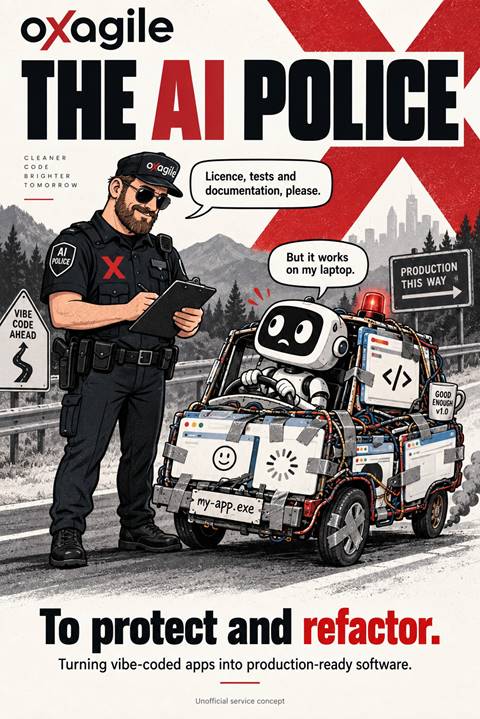
Not an Oxagile service mark
Somebody drew the problem before we wrote the page
A client sent this over after working with us. It is a joke, and the most accurate brief this engagement has had.
- 01Licence, tests and documentation, please
- 02But it works on my laptop
- 03Production, that way
What you already got right
Most software dies before it works. Yours works, so you start ahead.

Your validated idea is the spec we start from
The code you wrote is characterised, not replaced
The feedback you already get sets the fix order
The parts that matter most are hardened first
Speed was the easy win
A demo is cheap now. What turns yours into a business is the work left to do.

- A
A prototype proves the idea. A system earns the revenue
- B
A fix now costs a fraction of a rewrite later
- C
You keep the same speed, once it is safe to go fast
Capabilities
What we harden for you
Your 5 fixes, in the order they pay off.

Then you keep the speed
The hardening pass is where you start. What you build after it is the point.

Agent speed, with a named person signing each release
Your team learns to build with the agents
The same process we run on our own work
Model
What we fix, and what you decide
What we fix
- F1A written assessment before code changes start
- F2Security closed as committed checks
- F3Characterisation tests before a rewrite starts
- F4Licence and IP position, in writing
- F5A deploy that runs from a clean machine
What you decide
- C1Harden what exists, or rebuild one part of it
- C2Your team keeps the code, or we run it
- C3How far you push with agents afterwards
Next step
Send us the repository.
What you get: what breaks first, a price against each fix, and where we would start.